
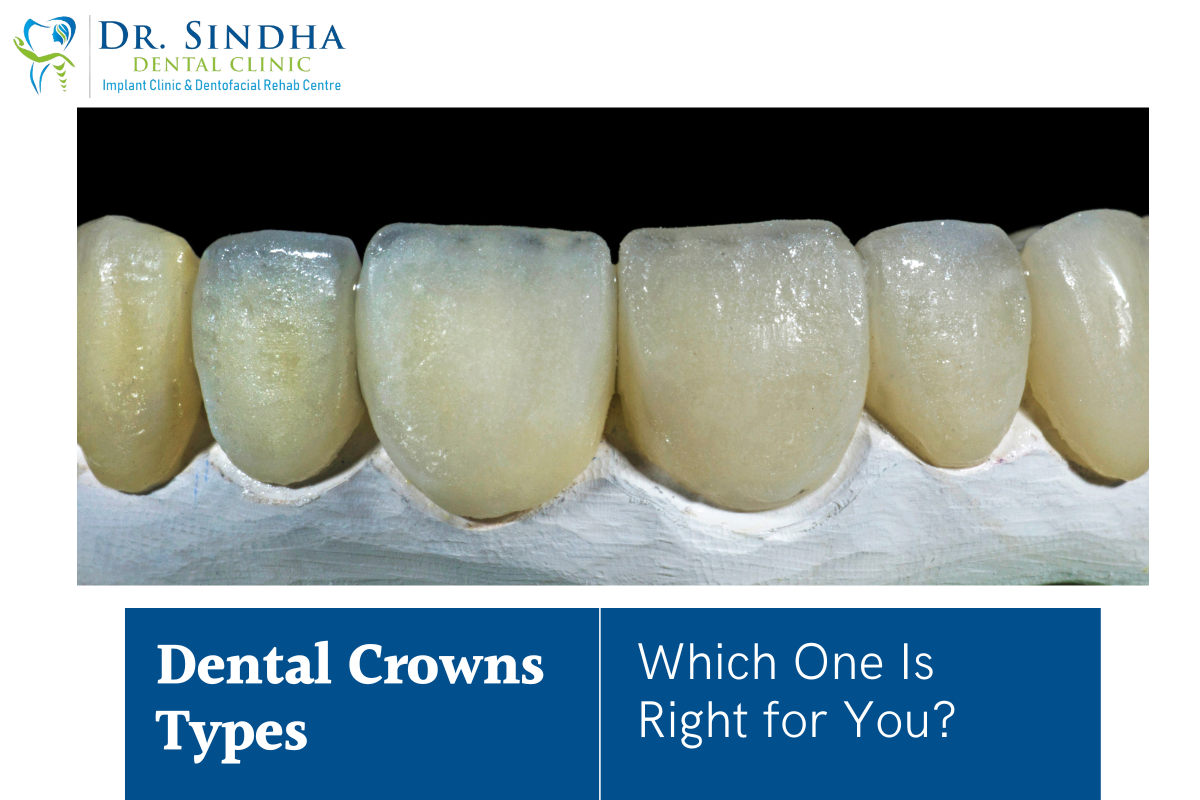
Types of Dental Crowns | Which One Is Right for You? | Dr. Sindha Dental Clinic
Dental crowns are one of the most common restorative procedures, used to protect damaged teeth, restore root canal treated teeth, anchor bridges, and enhance smile aesthetics. What many patients do not realise is that there are multiple types of dental crowns with different materials, strengths, aesthetics, and longevity. Choosing the wrong type for your tooth can lead to premature failure, poor appearance, or unnecessary expense. At Dr. Sindha Dental Clinic in Bharuch, Dr. Dharmendra V. Sindha (Prosthodontist) is the specialist in crown selection, design, and placement, trained specifically in matching the right crown type to every clinical situation.
What Is a Dental Crown?
A dental crown is a tooth shaped cap placed over a natural tooth that is damaged, decayed, weakened, or aesthetically compromised. It encases the entire visible portion of the tooth from the gum line upward, restoring shape, size, strength, function, and appearance. The crown becomes the new outer surface while the natural tooth root and core remain inside. Most types of dental crowns require 2 visits: tooth preparation and impression at the first visit, and crown cementation after 5 to 10 days of lab fabrication at the second visit.
Types of Dental Crowns at Dr. Sindha Dental Clinic
Zirconia Crowns
Made from zirconium dioxide ceramic, zirconia is the most popular modern crown material offering the best combination of strength, aesthetics, and biocompatibility. It is completely metal free with excellent natural translucency and lasts 15 to 20 years or more. Monolithic zirconia is best for back teeth needing maximum strength, while layered and multi layer high translucency zirconia is ideal for front teeth requiring the most natural appearance.
Porcelain Fused to Metal (PFM) Crowns
A metal alloy base with porcelain fused to the outer surface provides very high strength. PFM crowns are a budget friendly option for back teeth and bridge anchors, lasting 10 to 15 years. The main limitation is the metal margin at the gum line, which can show as a grey or dark line, especially as gums recede over time. PFM is now increasingly replaced by zirconia.
All Ceramic and E-max (Lithium Disilicate) Crowns
E-max crowns use lithium disilicate ceramic and offer the best aesthetics of all crown materials, with the most natural translucency, light transmission, and colour depth. They are virtually identical to natural enamel and last 10 to 15 years or more. They are best for front teeth and premolars where maximum aesthetics are the priority, but are not ideal for back molars in patients with heavy bite or bruxism.
Full Metal and Gold Crowns
Made from gold alloy or base metal alloy, full metal crowns offer the highest strength and longest lifespan of 20 to 30 years or more. Their drawback is their fully metallic appearance. They are best for hidden back molars in patients with extremely heavy bite forces or severe bruxism, and require minimal tooth preparation compared to ceramic options.
CEREC and Same Day CAD/CAM Crowns
The crown is designed digitally and milled in clinic within 1 to 2 hours using zirconia or lithium disilicate ceramic blocks. No lab is required, no temporary crown is needed, and the entire process is completed in a single visit. This is ideal for patients wanting single visit completion or who have difficulty with temporaries.
The Crown Procedure at Dr. Sindha Dental Clinic
The first visit involves tooth preparation, shade selection, and a digital impression or scan sent to the lab with a temporary crown placed to protect the prepared tooth. Over 5 to 10 working days, the crown is fabricated to exact specifications. The second visit involves removing the temporary crown, trying in the permanent crown, checking fit, colour, bite, and margins, making adjustments, and cementing permanently. For same day crowns, digital scanning and in clinic milling deliver the crown within the same appointment. A follow up bite check is done at 1 week and routine monitoring continues at 6 month intervals.
Why Choose Dr. Sindha Dental Clinic for Dental Crowns?
Dr. Dharmendra V. Sindha (Prosthodontist, MDS) has the highest level of specialist training in crown selection, shade matching, margin precision, and bite balance. All types of dental crowns are available including all subtypes of zirconia, E-max, PFM, full metal, and same day CEREC options, so the right material is chosen for every tooth. Dr. Shreya Mahida Sindha (BDS, Micro-Endo Specialist) performs microscope enhanced root canals before crown placement when needed, providing a seamless endo to crown workflow. Digital impressions and premium international grade materials ensure accurately fitting, long lasting, and natural looking results. The clinic is rated 5.0 out of 5 with 92 reviews and is located on Railway Station Road, Bharuch, open seven days a week.
FAQs About Types of Dental Crowns
What is the best type of dental crown?
It depends on tooth location, bite forces, aesthetics, and individual needs. Zirconia is the best all rounder. E-max is best for front teeth aesthetics. Full metal is strongest for hidden back molars. A Prosthodontist recommends the ideal type for your specific situation.
What is the difference between zirconia and E-max crowns?
Zirconia is stronger and ideal for back teeth and heavy bite cases. E-max offers slightly better natural translucency and is ideal for front teeth where aesthetics are the priority. High translucency zirconia now bridges this gap effectively.
Do I need a root canal before getting a crown?
Not always. Crowns are placed on both vital and root canal treated teeth. Root canal treatment is only needed if the tooth’s nerve is infected or dying.
What is a same day crown and how does it work?
A crown is designed digitally and milled in clinic within 1 to 2 hours using zirconia or ceramic. No lab is required, no temporary crown is needed, and the entire procedure is completed in a single visit.
Are metal crowns still used?
Yes, primarily for hidden back molars in patients with very heavy bite forces or severe bruxism. Most patients now prefer zirconia as the modern metal free alternative with excellent strength and aesthetics.