
Jaw Clenching Treatment | Stop Bruxism, Protect Your Teeth and Relieve Pain | Dr. Sindha Dental Clinic
Jaw clenching is far more common than people realise. Many patients clench or grind their teeth without knowing it until a dentist identifies wear patterns, fractures, or jaw pain at a routine check up. The force generated during clenching can be 6 to 10 times greater than normal chewing force, causing serious damage to teeth, gums, jaw joints, and muscles over time. Effective jaw clenching treatment addresses both the damage caused and the underlying triggers. At Dr. Sindha Dental Clinic in Bharuch, Dr. Dharmendra V. Sindha (Prosthodontist) specializes in occlusal splints, bite adjustment, and full mouth rehabilitation for bruxism damage, providing comprehensive care tailored to each patient’s severity.
What Is Jaw Clenching?
Jaw clenching, clinically known as bruxism, is the habitual clenching and grinding of the teeth, typically involuntary and subconscious. Clenching means teeth are pressed tightly together without grinding movement, while grinding involves rhythmic side to side or forward and backward movement of clenched teeth that wears down surfaces. Sleep bruxism occurs during sleep and the patient is usually unaware. Awake bruxism happens during stress or concentration and may or may not be noticed by the patient. Sleep bruxism tends to be more severe because conscious inhibition is reduced during sleep. Both types affect an estimated 8 to 10 percent of adults.
What Causes Jaw Clenching?
Stress and anxiety are the most common triggers, as emotional tension manifests as physical jaw tension. Sleep disorders like sleep apnea and snoring frequently co-occur with bruxism. Malocclusion or a misaligned bite causes teeth to contact unevenly, prompting the brain to repetitively clench in search of a comfortable position. Missing teeth and poorly fitting restorations like a high crown or filling can also trigger a clenching response. Medications like SSRIs, stimulants, and antipsychotics are known to cause or worsen bruxism. Lifestyle factors including heavy caffeine consumption, alcohol use, tobacco, and dehydration also contribute.
Signs and Symptoms of Jaw Clenching
Dental signs include flattened and worn down tooth surfaces where chewing surfaces appear shorter, chipped or cracked teeth from repeated excessive force, tooth sensitivity from enamel loss, and broken fillings, crowns, or veneers. Jaw and facial symptoms include jaw pain and tenderness especially upon waking, tight and tired jaw muscles, limited mouth opening, TMJ clicking or pain, and an enlarged square jaw appearance from overdeveloped masseter muscles due to chronic clenching. Headaches, particularly on the sides of the head upon waking, along with neck and shoulder pain and earache without infection are also common signs. Many patients are first diagnosed at a routine dental check up when the dentist identifies wear patterns.
Jaw Clenching Treatment Options
Occlusal Splints and Night Guards
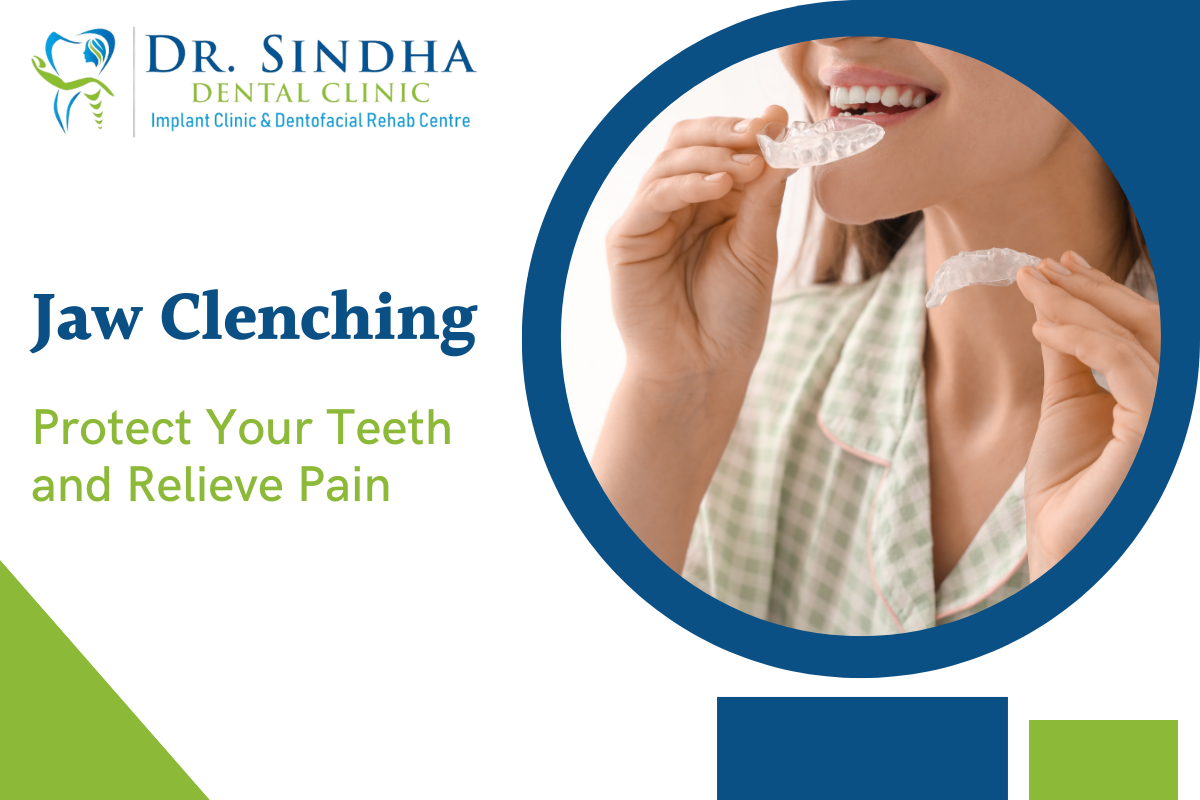
The first line jaw clenching treatment is a custom made occlusal splint worn during sleep. It creates a physical barrier preventing direct tooth to tooth contact, redistributes clenching forces, and allows jaw muscles to relax. Hard acrylic splints are preferred for heavy clenchersers for their durability and effectiveness. Dr. Sindha (Prosthodontist) fabricates precision fitted splints with proper occlusal balance, unlike generic pharmacy products.
Bite Adjustment and Occlusal Equilibration
When specific premature contacts or bite imbalances are triggering clenching, selective reshaping of tooth surfaces achieves even and balanced bite contact. This reduces the brain’s reflex to search for a comfortable position and requires Prosthodontist expertise for precise and conservative reshaping.
Botox Injections (Masseter Botulinum Toxin)
Botulinum toxin injected into the masseter muscle reduces clenching force by partially relaxing the muscle while preserving normal chewing function. Results begin in 3 to 7 days, last 4 to 6 months, and repeat injections are needed. It also reduces masseter hypertrophy that creates a square jaw appearance. It is best for severe clenchersers unresponsive to splints and patients with significant TMJ pain.
Stress Management
Addressing the root cause is essential for long term jaw clenching treatment. Cognitive Behavioural Therapy helps identify and modify stress patterns. Relaxation techniques, biofeedback, consistent sleep hygiene, limiting caffeine and alcohol, and regular exercise all reduce bruxism activity. Throughout the day, practice keeping teeth slightly apart with lips closed, as teeth should never be touching at rest.
Restorative Dental Repair
After bruxism is managed, the dental damage is repaired. Composite bonding rebuilds worn tooth edges, veneers and crowns restore severely worn or fractured teeth, and full mouth rehabilitation is available for patients with significant bite collapse from years of clenching. Dr. Shreya Mahida Sindha (BDS, Micro-Endo Specialist) treats cracked or fractured teeth from bruxism that may require root canal treatment.
Why Choose Dr. Sindha Dental Clinic for Jaw Clenching Treatment?
Dr. Dharmendra V. Sindha (Prosthodontist, MDS) is a specialist in bite science, splint design, bite adjustment, and bite reconstruction after bruxism damage. Custom fabricated night guards and occlusal splints are made from dental impressions for optimal fit and protection. Bite analysis identifies imbalances contributing to clenching, and Botox assessment is available for severe masseter hypertrophy cases. Bruxism damaged teeth are restored with bonding, crowns, veneers, or full mouth rehabilitation. The clinic is rated 5.0 out of 5 with 92 reviews and is located on Railway Station Road, Bharuch, open seven days a week.
FAQs About Jaw Clenching Treatment
What is the best treatment for jaw clenching?
A custom occlusal splint or night guard is the first line treatment, protecting teeth and relaxing jaw muscles. Combined with stress management, it is the most effective approach for most patients. Severe cases may benefit from Botox injections.
Can jaw clenching damage teeth permanently?
Yes. Clenching forces are 6 to 10 times greater than normal chewing. It causes tooth wear, fractures, broken restorations, gum recession, and TMJ damage. Early treatment prevents irreversible damage.
Does stress cause jaw clenching?
Stress and anxiety are the number one cause of bruxism. Managing stress through exercise, relaxation, CBT, and lifestyle changes is a crucial part of long term treatment alongside dental protection.
Can Botox treat jaw clenching?
Yes. Botox injected into the masseter muscle reduces clenching force for 4 to 6 months by partially relaxing the muscle. It also slims a square jaw appearance caused by masseter hypertrophy with repeat treatments.
Will a night guard cure jaw clenching?
No. A night guard protects your teeth from the damage of clenching but does not eliminate the habit. Addressing triggers such as stress, sleep quality, and bite imbalance is essential for long term management.