
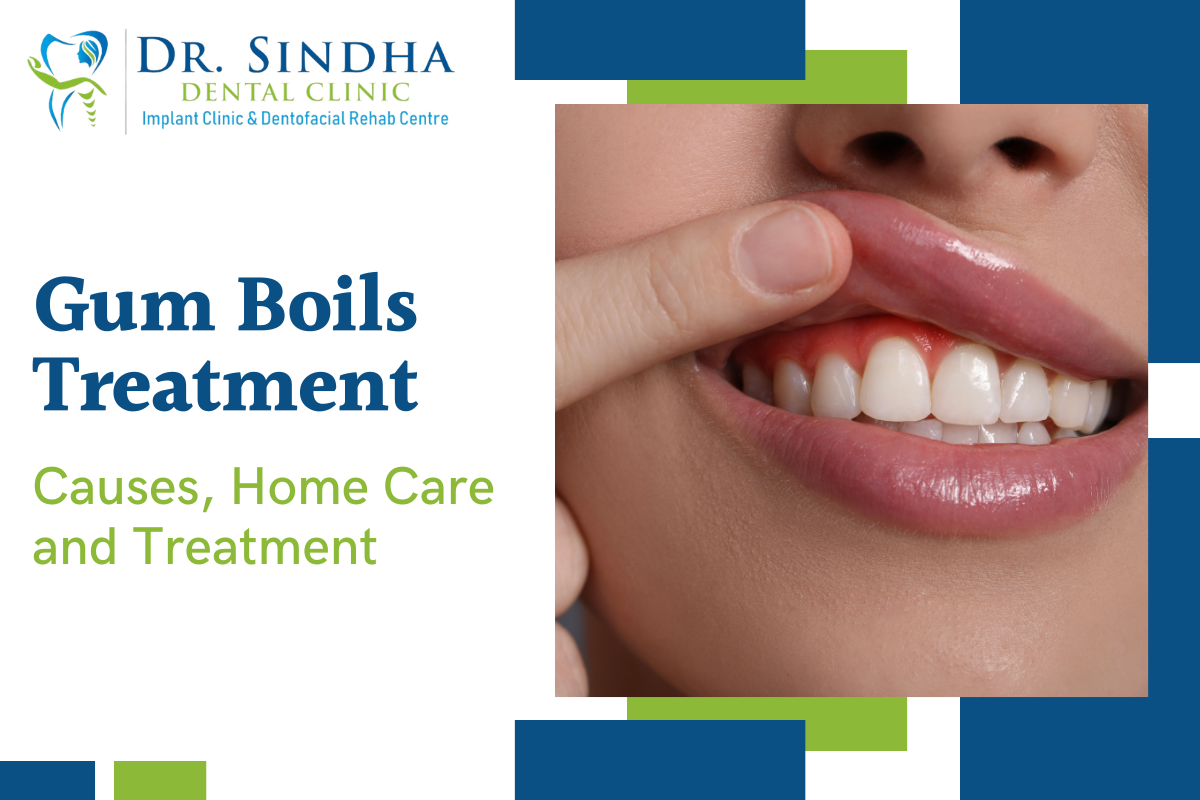
Gum Boils Treatment | Causes, Home Care and When to See a Dentist | Dr. Sindha Dental Clinic
A gum boil is a swollen, pus filled bump on the gums that signals an active bacterial infection underneath. It may look like a small pimple or blister, appearing red, white, or yellowish near any tooth. While it might burst on its own and release pus with a foul taste, this does not mean the infection is gone. The boil is a symptom, not the disease, and the underlying infection in the tooth root or gum pocket requires professional gum boils treatment. Ignoring it risks the infection spreading to the jaw, neck, or bloodstream. At Dr. Sindha Dental Clinic in Bharuch, Dr. Shreya Mahida Sindha (BDS, Micro-Endo Specialist) treats the root cause with microscope enhanced precision, and Dr. Dharmendra V. Sindha (Prosthodontist) restores the affected tooth after the infection is cleared.
What Is a Gum Boil?
A gum boil, also called a parulis or dental abscess fistula, is a sign that infection has built up inside or around a tooth and the body is creating a drainage pathway. Proper gum boils treatment requires identifying the source. The most common type is a periapical abscess where infection at the tip of the tooth root drains through the bone and gum. A periodontal abscess forms in a deep gum pocket alongside the tooth root due to advanced gum disease. A gingival abscess affects only the gum tissue and is often caused by a trapped foreign body like a food particle. Regardless of the type, professional treatment is always necessary.
What Causes Gum Boils?
Untreated tooth decay is the most common cause, where bacteria penetrate through a cavity into the pulp, causing infection that leads to an abscess and then a gum boil. A failed or incomplete root canal where the previous treatment did not fully clear the infection can also cause a boil. Cracked or fractured teeth allow bacteria to enter and infect the pulp. Advanced gum disease creates deep pockets that harbour bacteria and form abscesses. Impacted wisdom teeth, poor oral hygiene, a weakened immune system from conditions like diabetes, and trapped foreign bodies in the gum tissue are other recognized causes.
Gum Boil Symptoms and Emergency Signs
A visible bump on the gum with pain, tenderness, and swelling in the surrounding area are the primary signs. Pus discharge with a foul taste, persistent bad breath, sensitivity in the affected tooth, and the tooth feeling raised when biting are common symptoms. Seek immediate emergency care if facial swelling spreads to the eye, neck, or under the jaw, if you experience difficulty breathing or swallowing, high fever with chills, or inability to open your mouth.
Gum Boil Home Care for Temporary Relief
Home remedies provide temporary symptom relief only and do not treat the underlying infection. Rinse gently with warm saltwater 2 to 3 times daily to draw pus toward the surface and reduce bacteria. Apply a cold compress wrapped in cloth to the cheek for 15 minutes to reduce swelling. Over the counter ibuprofen helps with pain and inflammation. A small amount of clove oil on a cotton ball applied to the area provides natural pain relief. Do not pop, squeeze, or lance the boil yourself as this risks spreading the infection. These measures are bridges to your dental appointment, not substitutes for professional gum boils treatment.
Professional Gum Boils Treatment
Professional gum boils treatment starts with a clinical examination and digital X ray to identify the infection source, whether it is a periapical infection, periodontal abscess, or gingival issue. The abscess may be drained through incision to relieve pressure and pain. If the cause is an infected tooth root, root canal treatment removes the infected pulp, cleans and disinfects the canals, and seals the tooth. Dr. Shreya performs microscope enhanced root canals for precision in locating all infected canals. If a previous root canal has failed, retreatment or apicoectomy is performed. For periodontal abscesses, deep scaling and root planing clean bacterial deposits from gum pockets, with gum surgery if pockets are too deep. For gingival abscesses, the foreign body or irritant is removed with local drainage. Antibiotics are prescribed only when the infection is spreading with facial swelling, fever, or lymph node involvement. They alone cannot cure a dental abscess. After the infection is resolved, the tooth is restored with a crown or filling, and follow up visits confirm healing.
Why Choose Dr. Sindha Dental Clinic for Gum Boils Treatment?
Dr. Shreya Mahida Sindha (BDS, Micro-Endo Specialist) treats the root cause of periapical abscesses with microscope enhanced precision, the highest standard of endodontic care. Dr. Dharmendra V. Sindha (Prosthodontist) restores the tooth with precision crowns after infection is cleared. Same day emergency appointments are available for gum boils with spreading infection. The complete treatment pathway from diagnosis to drainage to root canal or periodontal treatment to restoration and follow up is handled at one clinic. Antibiotics are prescribed only when truly needed based on an evidence based approach. The clinic is rated 5.0 out of 5 with 92 reviews and is located on Railway Station Road, Bharuch, open seven days a week.
FAQs About Gum Boils Treatment
Will a gum boil go away on its own?
No. The boil may temporarily shrink or burst, but the underlying infection remains active. Without professional treatment, it recurs and can worsen. Always see a dentist.
Can I pop a gum boil at home?
No. Never attempt to lance, squeeze, or pop a gum boil yourself. This can spread the infection deeper into tissues and the bloodstream. Let your dentist handle drainage safely.
Do I need antibiotics for a gum boil?
Not always. Many abscesses are resolved with drainage and treatment of the root cause alone. Antibiotics are prescribed when infection is spreading. They alone cannot cure a dental abscess.
Can a gum boil come back after treatment?
If the underlying cause is fully treated with a complete root canal or thorough periodontal treatment, recurrence is unlikely. Incomplete treatment or new decay can cause new abscesses.
Is a gum boil a dental emergency?
Yes, if accompanied by facial swelling, fever, difficulty breathing or swallowing, or spreading redness. Even without these signs, a gum boil should be evaluated promptly as it indicates an active infection.