
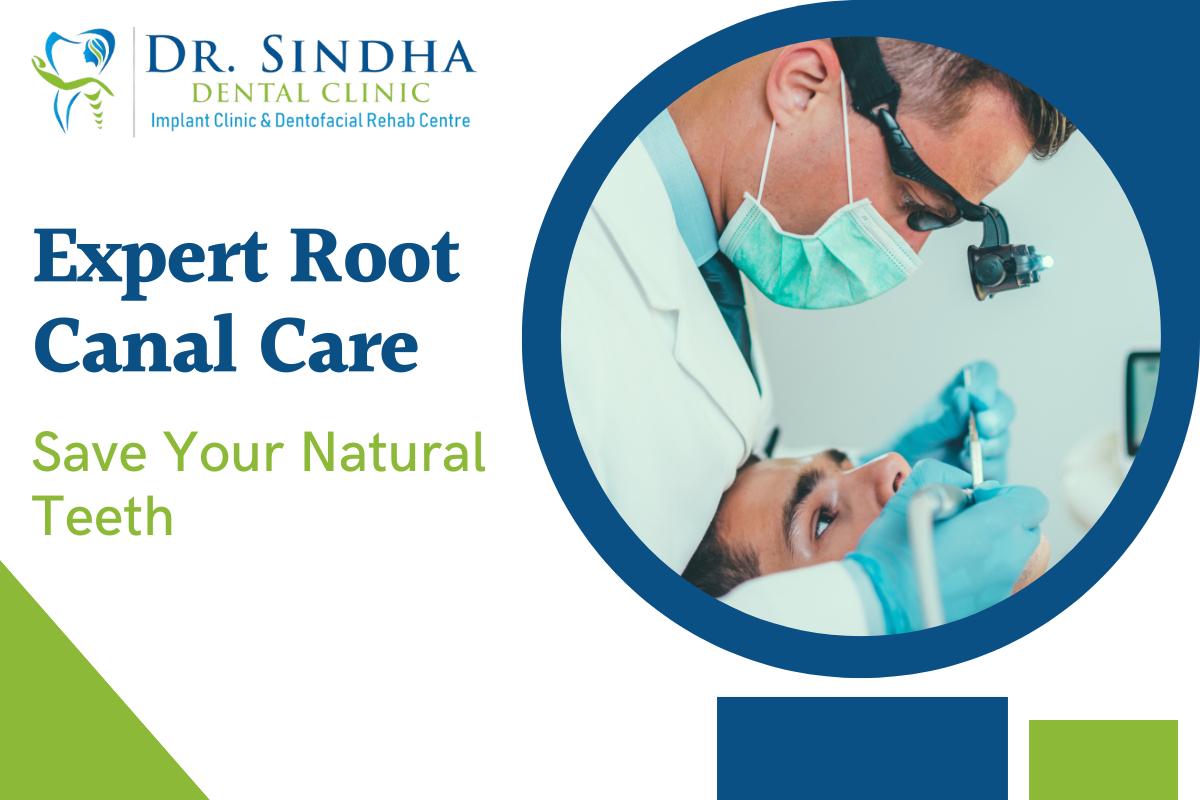
Endodontic Treatment | Save Your Natural Teeth with Expert Root Canal Care | Dr. Sindha Dental Clinic
A damaged or infected tooth does not always need to be pulled out. Endodontic treatment focuses on saving your natural teeth by treating the inner tissues of the tooth, including the dental pulp, nerves, and root canals. The word “endo” means inside and “odont” means tooth, and this branch of dentistry deals with everything happening within. The most common endodontic treatment is root canal therapy, but the field also includes retreatment, apicoectomy, and trauma management. At Dr. Sindha Dental Clinic in Bharuch, Dr. Shreya Mahida Sindha (BDS, Micro-Endo Specialist) performs all endodontic procedures using a dental operating microscope that provides up to 25x magnification. This microscope enhanced approach allows visualization of tiny, hidden, or calcified canals that standard treatment may miss, resulting in higher success rates and truly painless care.
What Is Endodontic Treatment?
Endodontic treatment is any dental procedure that treats the inner pulp of a tooth. The pulp can become infected or inflamed due to deep decay, cracks, chips, repeated dental procedures, or trauma. The purpose of endodontic treatment is to remove the infected pulp, clean and disinfect the root canal system, and fill and seal it to prevent reinfection. The goal is always to save the natural tooth rather than extract it. The treated tooth continues to function normally for chewing, biting, and aesthetics. Endodontists complete 2 to 3 years of advanced training beyond dental school specifically in these procedures, and micro-endodontics using a dental microscope represents the global gold standard practiced at leading centres worldwide.
Types of Endodontic Treatment
Root Canal Treatment (RCT)
The most common endodontic treatment. Infected pulp is removed, canals are cleaned and shaped, filled with biocompatible gutta-percha material, and sealed. The tooth is then restored with a crown for strength. With modern rotary instruments and microscope guidance, it can often be completed in a single visit.
Endodontic Retreatment
When a previously treated root canal fails or develops new infection, the old filling material is removed and canals are recleaned, reshaped, and refilled. Common reasons include missed canals, inadequate cleaning, new decay, or delayed crown placement. Micro-endo expertise is critical here as the microscope helps identify why the first treatment failed.
Apicoectomy (Root End Surgery)
A surgical endodontic treatment performed when conventional root canal or retreatment cannot resolve the infection. The root tip is surgically removed along with surrounding infected tissue, and a small filling is placed at the root end to seal the canal.
Signs You Need Endodontic Treatment
Watch for persistent or spontaneous toothache, especially throbbing pain that wakes you at night. Prolonged sensitivity to hot or cold that lingers after the stimulus is removed, pain when biting or chewing, swelling of gums near the affected tooth, or darkening of a tooth are all warning signs. A cracked or chipped tooth with deep pain, a deep cavity reaching near the pulp, or a previous filling that has developed new pain also indicate the need for endodontic treatment. Sometimes there are no symptoms at all, and infection is detected only through dental X rays during routine check ups.
The Root Canal Procedure at Dr. Sindha Dental Clinic
The process starts with a clinical examination and digital X ray to assess the infection and root anatomy. Local anesthesia numbs the area completely, making the procedure painless. A rubber dam isolates the tooth to keep it dry and contamination free. A small opening is made through the crown to access the pulp chamber. The infected pulp is removed and canals are cleaned and shaped using rotary instruments under microscope magnification. Antimicrobial solutions flush out bacteria and debris. The cleaned canals are filled with gutta-percha and sealed with adhesive cement. Finally, the tooth is restored with a permanent filling, and a crown is recommended for back teeth to prevent fracture. Dr. Shreya’s microscope enhanced approach ensures every canal is located, every curve is navigated precisely, and cleaning is verified visually for superior outcomes.
Endodontic Treatment Aftercare
Mild soreness for 2 to 3 days after the procedure is normal and manageable with over the counter painkillers. Avoid chewing on the treated tooth until the permanent crown is placed. Continue brushing and flossing normally and complete any prescribed antibiotics. Get the crown placed promptly as a root canal treated tooth without a crown is prone to fracture. Attend the follow up appointment and contact your dentist if you experience severe pain, swelling, or if the temporary filling dislodges.
Why Choose Dr. Sindha Dental Clinic for Endodontic Treatment?
Dr. Shreya Mahida Sindha (BDS, Micro-Endo Specialist) performs all endodontic procedures using a dental operating microscope, a level of care available at very few clinics. This results in higher success rates by locating hidden canals, navigating complex anatomy, and verifying complete cleaning. Most root canals are completed in a single visit using advanced rotary instruments. Dr. Dharmendra V. Sindha (Prosthodontist) ensures the treated tooth receives a precision crafted crown, providing complete endo to crown care under one roof. The clinic is rated 5.0 out of 5 with 92 reviews and is equipped with digital X rays, ultrasonic instruments, and biocompatible filling materials. Located on Railway Station Road, Bharuch, the clinic is open seven days a week.
FAQs About Endodontic Treatment
Is root canal treatment painful?
No. It is performed under local anesthesia, and most patients compare it to getting a filling. Post procedure mild soreness resolves within 2 to 3 days.
What is a Micro-Endo Specialist?
A dentist with specialized training in microscope enhanced endodontics. Dr. Shreya Mahida Sindha uses up to 25x magnification for precision root canal treatment, identifying hidden canals and ensuring thorough cleaning that standard treatment may miss.
Do I need a crown after root canal?
Yes, it is strongly recommended, especially for back teeth. A root canal treated tooth becomes brittle, and a crown protects it from fracture while restoring full function.
What happens if I do not get endodontic treatment?
The infection spreads, leading to abscess, bone loss, severe pain, and eventual tooth loss. Untreated dental infections can also affect other areas of the body.
How long does a root canal treated tooth last?
With proper crown restoration and good oral hygiene, a root canal treated tooth can last a lifetime.